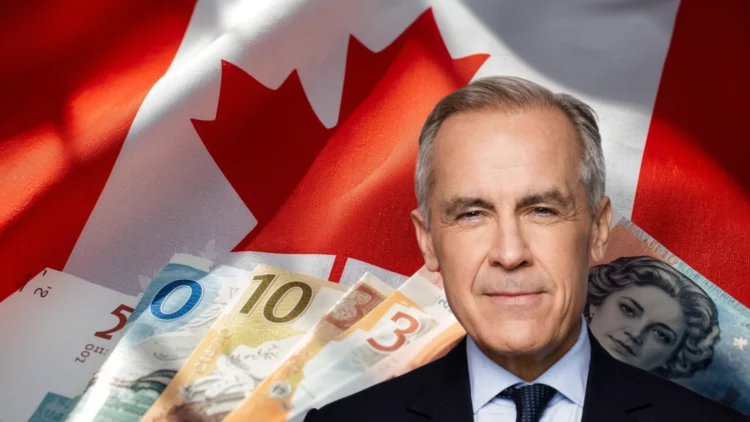
The Government of Canada has officially confirmed that the federal minimum wage will rise to $18.15 per hour starting April 1, 2026. This announcement, released by Employment and Social Development Canada, removes any uncertainty about the wage adjustment for the coming year.
The increase represents a 40-cent rise from the current $17.75 hourly rate, translating into a 2.3 percent increase. While the percentage may appear modest, the broader trend is more significant. Since the introduction of the modern federal minimum wage system in 2021, the rate has climbed by 21 percent in total.
Workers in federally regulated sectors such as banking, telecommunications, aviation, and interprovincial transportation will begin seeing the updated wage reflected in their paychecks from the first pay period in April 2026.
Why the New Wage Is $18.15 Instead of $18.10
Earlier projections had estimated the 2026 wage at $18.10. However, the final number came in slightly higher due to how the calculation system works.
The federal minimum wage is tied to inflation using the Consumer Price Index. For 2025, the annual average CPI was 2.1 percent. Applying that increase to the current wage of $17.75 results in approximately $18.12. The key detail lies in the rounding rule: the federal wage is always rounded up to the nearest $0.05, bringing the final rate to $18.15.
This small adjustment has a real financial impact. Over a full year of full-time work, that additional five cents per hour adds roughly $104 in extra income, which accumulates further over time.
How the Federal Minimum Wage Has Grown Since 2021
Before 2021, Canada had not updated its federal minimum wage since 1996. The introduction of an indexed system marked a major shift toward predictable and consistent wage adjustments.
Here is how the wage has evolved:
Year-by-Year Growth
2021 to 2023: Rapid Increases
The wage began at $15.00 in 2021 and rose quickly due to post-pandemic inflation. The largest jump occurred in 2023, when the rate increased by $1.10 in a single year.
2024 to 2026: Stabilization Phase
As inflation moderated, increases became smaller but more stable, typically ranging between 40 and 65 cents annually.
By 2026, the wage reaches $18.15, representing a $3.15 hourly increase over five years. For full-time workers, this translates into more than $6,500 in additional annual earnings compared to 2021.
Who Qualifies for the Federal Minimum Wage Increase
The federal minimum wage does not apply to all workers. It covers only those employed in federally regulated industries, representing about 6 percent of the Canadian workforce, or approximately 1.1 million workers.
Key Sectors Covered
Banking and Financial Services
Major national banks fall under federal jurisdiction due to their role in the national economy.
Telecommunications and Broadcasting
Companies providing communication services across provincial boundaries are federally regulated.
Transportation
Airlines, railways, and interprovincial trucking companies are included because their operations cross provincial or international borders.
Federal Crown Corporations
Government-owned entities also follow federal wage standards.
Only around 26,000 workers earn at or near the minimum wage within these sectors, meaning they will directly benefit from this increase.
Federal vs Provincial Wages: How They Compare Across Canada
Canada’s wage system operates on a “higher rate applies” rule. Workers receive whichever minimum wage is higher between federal and provincial levels.
Provinces Where Federal Wage Is Higher
In most provinces, the new federal wage of $18.15 exceeds provincial rates. This includes:
Alberta
With a stagnant provincial wage of $15.00, federally regulated workers earn significantly more, creating the largest wage gap in the country.
Saskatchewan and Manitoba
These provinces also have relatively low provincial minimum wages, making the federal rate substantially more beneficial.
Ontario and Quebec
Although these provinces have higher wage floors than some others, the federal rate still surpasses them until their next scheduled increases.
Regions Where Provincial or Territorial Wages Are Higher
Nunavut
Nunavut maintains the highest minimum wage in Canada at $19.75, reflecting its high cost of living. Workers there will continue earning above the federal rate.
Yukon
Yukon is expected to exceed the federal rate following its 2026 adjustment.
British Columbia
British Columbia temporarily falls below the federal rate in April but is expected to surpass it later in the year after its scheduled increase.
What $18.15 Per Hour Means for Your Income
The new wage translates into measurable changes in earnings depending on work hours.
Full-Time Earnings
A full-time worker (40 hours per week) will earn approximately $37,752 annually before taxes.
Part-Time Earnings
Those working 20 to 30 hours per week will see proportional increases, with annual earnings ranging from roughly $18,800 to $28,300.
Compared to the previous rate, full-time workers will earn about $832 more per year before taxes, with an estimated $650 to $700 increase in take-home pay depending on location and deductions.
The Living Wage Gap: Why Minimum Wage Still Isn’t Enough
Despite the increase, the federal minimum wage remains below what is considered a “living wage” in most major Canadian cities.
Understanding the Living Wage
A living wage reflects the income required to cover essential expenses such as housing, food, transportation, and childcare while maintaining a basic standard of living.
Major City Comparisons
Metro Vancouver
Living wages exceed $27 per hour, leaving a gap of nearly $10 compared to the federal minimum.
Toronto and Victoria
These cities also show significant gaps, with living wages well above $25 per hour.
Ottawa and Calgary
Even in relatively more affordable cities, the difference remains substantial, ranging between $4 and $6 per hour.
This gap highlights a key reality: minimum wage protects against extreme low pay but does not guarantee financial stability.
Future Projections: Where the Wage Could Go by 2030
If inflation remains close to the Bank of Canada target of 2 percent, the federal minimum wage is expected to continue rising gradually.
Estimated Growth Path
2027 to 2028
The wage could reach approximately $18.55 to $18.95.
2029 to 2030
By the end of the decade, it may approach $19.75, aligning with current levels in high-cost regions like Nunavut.
These projections depend heavily on inflation trends. Higher inflation would lead to faster wage growth, while lower inflation would slow increases.
Why the Indexation System Matters
The current wage system is designed to automatically adjust based on inflation, removing political uncertainty from the process.
This approach offers several advantages:
Predictability for Workers
Employees can expect consistent annual increases without relying on policy changes.
Stability for Employers
Businesses can plan for incremental wage adjustments rather than sudden large increases.
Protection Against Inflation
The system ensures wages keep pace with rising costs, preserving purchasing power over time.
Important Dates to Keep in Mind
The timeline for the 2026 wage increase is straightforward:
March 24, 2026
Official announcement by federal authorities.
April 1, 2026
New wage comes into effect.
First April Pay Period
Workers begin receiving updated wages in their paychecks.
January 2027
Release of CPI data that will determine the next increase.
Final Thoughts: A Step Forward, But Not a Complete Solution
The increase to $18.15 per hour represents steady progress in Canada’s wage policy. Since 2021, the system has delivered consistent, inflation-linked increases that provide a level of financial protection for workers in federally regulated industries.
However, the gap between minimum wage and living wage remains significant. While the increase offers additional income and stability, it does not fully address affordability challenges in high-cost regions.